
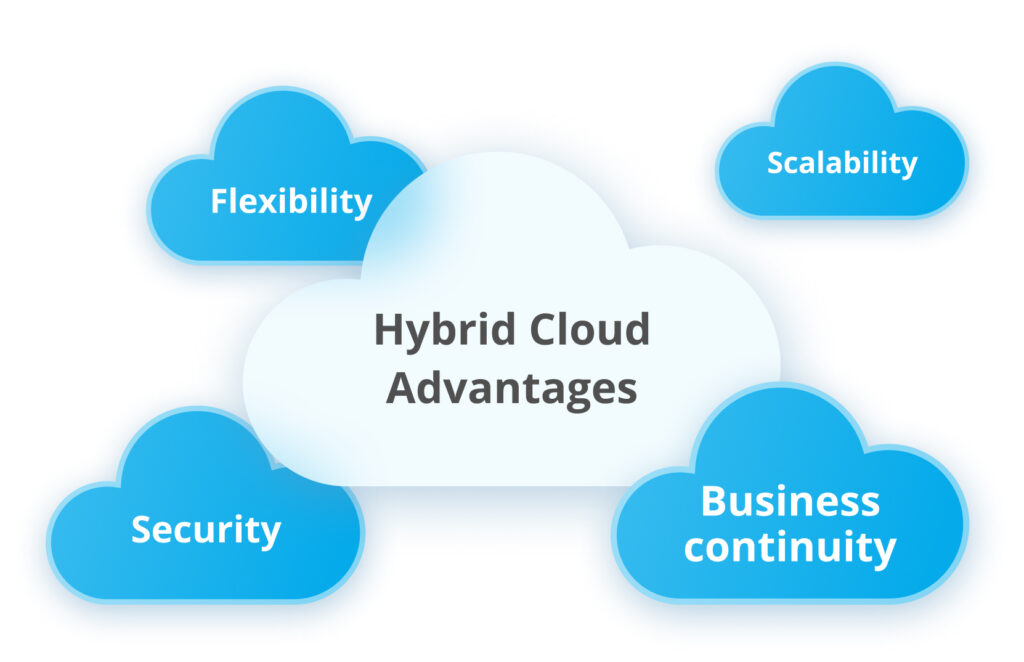
Hybrid cloud combines both public and private cloud environments, allowing businesses to keep sensitive data on-premises while using public cloud resources for other tasks. This model offers flexibility and cost savings, making it attractive for growing businesses. However, as organizations scale, security becomes a critical concern that must be addressed with thoughtful strategies.
Understanding Hybrid Cloud Security Challenges
Managing security in a hybrid cloud setup involves protecting data as it moves between environments. Businesses must ensure that security policies are consistent across both public and private clouds. Using hybrid cloud services and security for scalability can help organizations meet these needs while supporting business growth. Hybrid models can also face issues like data breaches, misconfigurations, and compliance risks.
Complexities in Hybrid Cloud Security
The hybrid cloud model introduces unique complexities. Data must be securely transferred between on-premises servers and public cloud platforms. This can make it harder to maintain visibility and control over where data is stored and who has access to it. Businesses need to evaluate their security controls to ensure that sensitive information is protected at every stage. For example, integrating on-premises security tools with cloud-native solutions requires careful planning and ongoing management. Additionally, businesses must be aware of shared responsibility models, which define which security tasks are handled by the cloud provider and which are the customer’s responsibility.
Key Components of a Secure Hybrid Cloud Strategy
A strong hybrid cloud strategy includes identity and access management, encryption, network security, and regular audits. Identity and access management controls who can access resources, reducing the risk of unauthorized entry. Encryption protects data both at rest and in transit. Network security tools, such as firewalls, help monitor and control traffic between environments.
Implementing Identity and Access Management
Identity and access management (IAM) is at the core of cloud security. Organizations should use multi-factor authentication, least privilege principles, and regular reviews of access permissions. By limiting access based on roles, businesses can reduce the risk of insider threats. For further guidance, the Cybersecurity & Infrastructure Security Agency (CISA) offers detailed IAM recommendations.
Data Encryption and Protection Measures
Data encryption is necessary to protect sensitive information in hybrid clouds. Encrypt data at rest and in transit using strong cryptographic algorithms. Regularly update encryption protocols to address new threats. Educate employees on data handling policies to prevent accidental exposure.
Securing Network Traffic and Monitoring
Monitoring network traffic between cloud environments helps detect unusual activity. Use intrusion detection and prevention systems to identify and respond to threats quickly. Segment networks to limit the spread of any potential breaches. Regular monitoring ensures that threats are identified before they can cause damage.
Regulatory Compliance in Hybrid Cloud Environments
Growing businesses must comply with regulations such as GDPR, HIPAA, or PCI DSS. Ensure that data storage and processing meet legal requirements in all cloud environments. Regular compliance audits and documentation help maintain trust with customers and partners. Cloud providers often offer compliance tools, but businesses must verify their effectiveness. For more on global privacy regulations, review the U.S. Federal Trade Commission’s guidance.
Incident Response Planning for Hybrid Clouds
An incident response plan prepares your business to handle security breaches. Establish clear roles and responsibilities for responding to incidents. Test your plan regularly to ensure that your team can act quickly. Having a documented plan can reduce downtime and limit the impact of security breaches.
Training Staff and Promoting Security Awareness
Employees play a vital role in cloud security. Provide regular training to help staff recognize phishing attempts and follow safe data practices. Encourage a culture of security awareness throughout the organization. Well-informed employees are less likely to fall victim to cyber threats. The SANS Institute offers a comprehensive security awareness toolkit for organizations.
Choosing the Right Hybrid Cloud Partners
Selecting reliable cloud service providers is essential. Assess each provider’s security certifications, incident response capabilities, and compliance track record. Work with partners who are transparent about their security practices and willing to collaborate on risk management. It’s important to conduct due diligence before signing any contracts, including reviewing third-party audit reports and understanding the provider’s approach to data protection.
Continuous Improvement and Future-Proofing Your Strategy
Hybrid cloud security is not a one-time task. Regularly review and update your security policies to address new threats and technologies. Stay informed about industry trends and evolving regulations. This approach helps ensure that your business remains secure as it grows. Businesses should also consider the future of their IT needs, such as the adoption of artificial intelligence, machine learning, or Internet of Things (IoT) devices, all of which can introduce new security considerations.
Hybrid Cloud Security Best Practices Checklist
To help growing businesses stay on track, here is a practical checklist of best practices for secure hybrid cloud deployments:
– Conduct a risk assessment before migrating to the cloud.
– Define clear data classification policies and identify sensitive information.
– Use strong multi-factor authentication for all access points.
– Regularly patch and update all cloud-connected systems.
– Monitor user activity and set up alerts for unusual behavior.
– Encrypt data both at rest and in transit.
– Segment networks to limit lateral movement in case of a breach.
– Test your incident response plan with simulated scenarios.
– Train staff regularly on the latest cybersecurity threats.
– Stay current with regulatory changes that impact your industry.
– Evaluate the security posture of all third-party vendors.
Each step helps to minimize risk and ensures a proactive stance against evolving cyber threats.
Case Study: Hybrid Cloud Security in Action
Consider a mid-sized healthcare provider that adopted a hybrid cloud model to manage patient records. Sensitive data remained on a private cloud, while less sensitive workloads were moved to the public cloud for cost efficiency. The organization implemented strict IAM controls, encrypted all patient data, and conducted quarterly compliance audits. When a phishing attack targeted their staff, their comprehensive training program ensured that the attack was reported immediately, and no data was compromised. This example highlights the importance of combining technical controls with human vigilance in hybrid cloud security.
Emerging Trends in Hybrid Cloud Security
The future of hybrid cloud security will likely involve more automation and artificial intelligence. Automated tools can help detect threats faster and respond more effectively. Zero trust security models, which assume no user or device is trustworthy by default, are becoming more popular. These models require strict verification for every access request, even from within the organization. As more businesses adopt hybrid cloud, the focus will shift toward continuous monitoring and real-time threat intelligence to stay ahead of cybercriminals.
Conclusion
Secure hybrid cloud strategies are vital for growing businesses seeking flexibility and scalability. By focusing on identity management, encryption, network monitoring, and ongoing staff education, organizations can reduce risks and build trust. Regular reviews and strong partnerships further support a robust security posture in the hybrid cloud environment.
FAQ
What is a hybrid cloud?
A hybrid cloud combines private and public cloud services, allowing businesses to use both for different workloads and data needs.
Why do growing businesses choose hybrid clouds?
A hybrid cloud offers flexibility, cost savings, and the ability to keep sensitive data on-premises while using the public cloud for other tasks.
How can businesses secure their hybrid cloud?
Key steps include strong identity management, data encryption, network monitoring, and regular staff training.
What role does compliance play in hybrid cloud security?
Compliance ensures that a business meets legal and industry data protection requirements, reducing the risk of penalties.
How often should security policies be reviewed?
Security policies should be reviewed regularly, especially when new threats emerge or when the business expands its cloud usage.